Puzzle persistence practice
3–4 سنواتSuccess Mindsetالمواد: Simple puzzle with six to 10 pieces
Start a simple puzzle together with six to 10 pieces. Before completing it, suggest taking a break to do something else, like have a drink of water. Tell your child you'll finish the puzzle after the break. This teaches that stopping an enjoyable activity and returning to it later is possible, building task persistence and delayed completion satisfaction.
جزء من رحلة Steadily التطورية — مخصصة لطفلك.
كيفية القيام بهذا النشاط
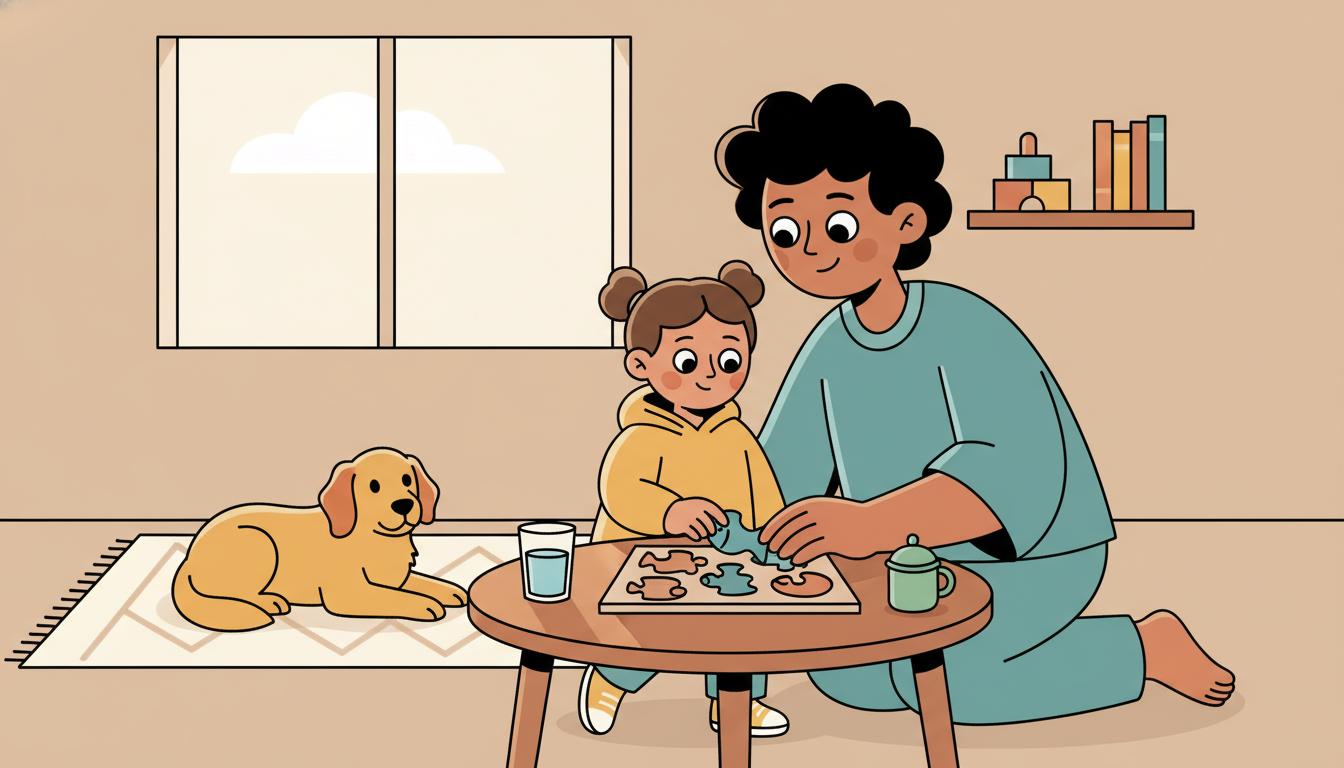
Start a simple puzzle together with six to 10 pieces. Before completing it, suggest taking a break to do something else, like have a drink of water. Tell your child you'll finish the puzzle after the break. This teaches that stopping an enjoyable activity and returning to it later is possible, building task persistence and delayed completion satisfaction.
لماذا هذا فعال
Task persistence in early childhood contributes to academic success and later educational attainment (Duckworth & Carlson, 2013). This activity teaches your child that they can pause a task and return to it, building both self-control and sustained attention. At 36-48 months, children are developing the ability to plan and follow through on activities, and this practice strengthens those emerging skills.
نصائح للوالدين
Choose a puzzle at your child's skill level so the activity stays positive.
Keep the break short, just one to two minutes, so your child can successfully return to the task.
When you resume, acknowledge that waiting was hard but celebrate finishing together.
المواد المطلوبة
Simple puzzle with six to 10 pieces
طرق التعلم
Structured Learning ActivitiesCollaborative and Cooperative PlayInquiry-Based Learning

هل أعجبك هذا النشاط؟ دعنا نتولى التخطيط بالنيابة عنك.
يضفي Steadily طابعاً شخصياً على كل نشاط ليناسب طفلك - اهتماماته، ومرحلته العمرية، والسمات التي يبنيها - ليكون وقت اللعب أكثر متعة وتكون لكل لحظة قيمتها.
تعرّف على كيفية عمل Steadily ←