Mirror and reflect feelings
4–5 سنواتFamily Connectionلا توجد مواد مطلوبة
When your child expresses a feeling or concern, reflect it back to them in your own words. If they say they are upset about something, you might say it sounds like they are feeling frustrated. This shows you understand and validates their experience. Mirroring helps children feel heard and teaches them emotional vocabulary for future conversations.
جزء من رحلة Steadily التطورية — مخصصة لطفلك.
كيفية القيام بهذا النشاط
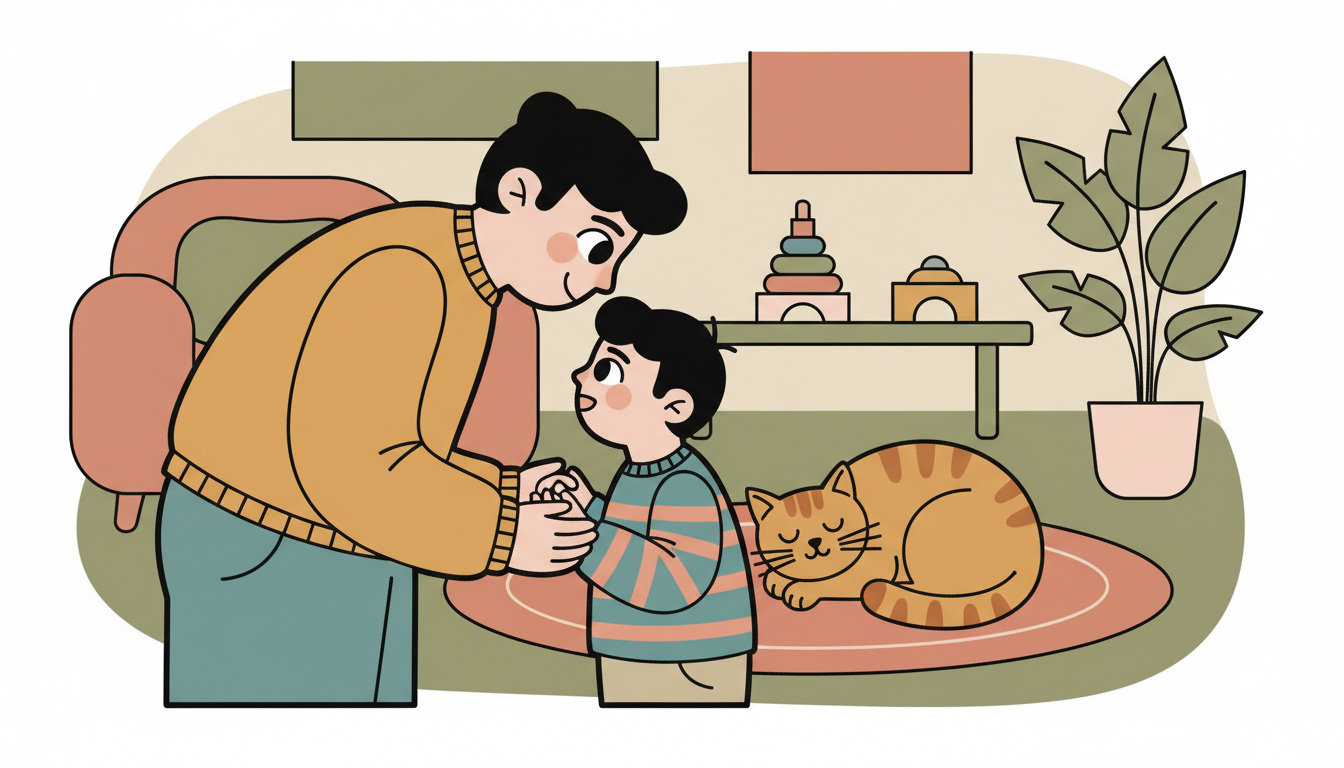
When your child expresses a feeling or concern, reflect it back to them in your own words. If they say they are upset about something, you might say it sounds like they are feeling frustrated. This shows you understand and validates their experience. Mirroring helps children feel heard and teaches them emotional vocabulary for future conversations.
لماذا هذا فعال
Research identifies mirroring and empathy as key factors that enhance parent-child relationship quality and children's psychological development (Zhang & Li, 2024). When parents validate feelings before problem-solving, children learn that their emotions matter. This builds trust and encourages continued open communication, which strongly correlates with enduring parent-child relationships (Hartos & Power, 2000).
نصائح للوالدين
Listen carefully before responding to get the feeling right.
Use a calm, warm tone when reflecting back.
Avoid jumping to solutions before acknowledging the feeling.
المواد المطلوبة
None
طرق التعلم
Cooperative LearningStructured Academic LearningProject-Based and Thematic Learning

هل أعجبك هذا النشاط؟ دعنا نتولى التخطيط بالنيابة عنك.
يضفي Steadily طابعاً شخصياً على كل نشاط ليناسب طفلك - اهتماماته، ومرحلته العمرية، والسمات التي يبنيها - ليكون وقت اللعب أكثر متعة وتكون لكل لحظة قيمتها.
تعرّف على كيفية عمل Steadily ←