Puppet feelings show
1–2 سنواتFamily Connectionالمواد: Sock puppet or stuffed animal
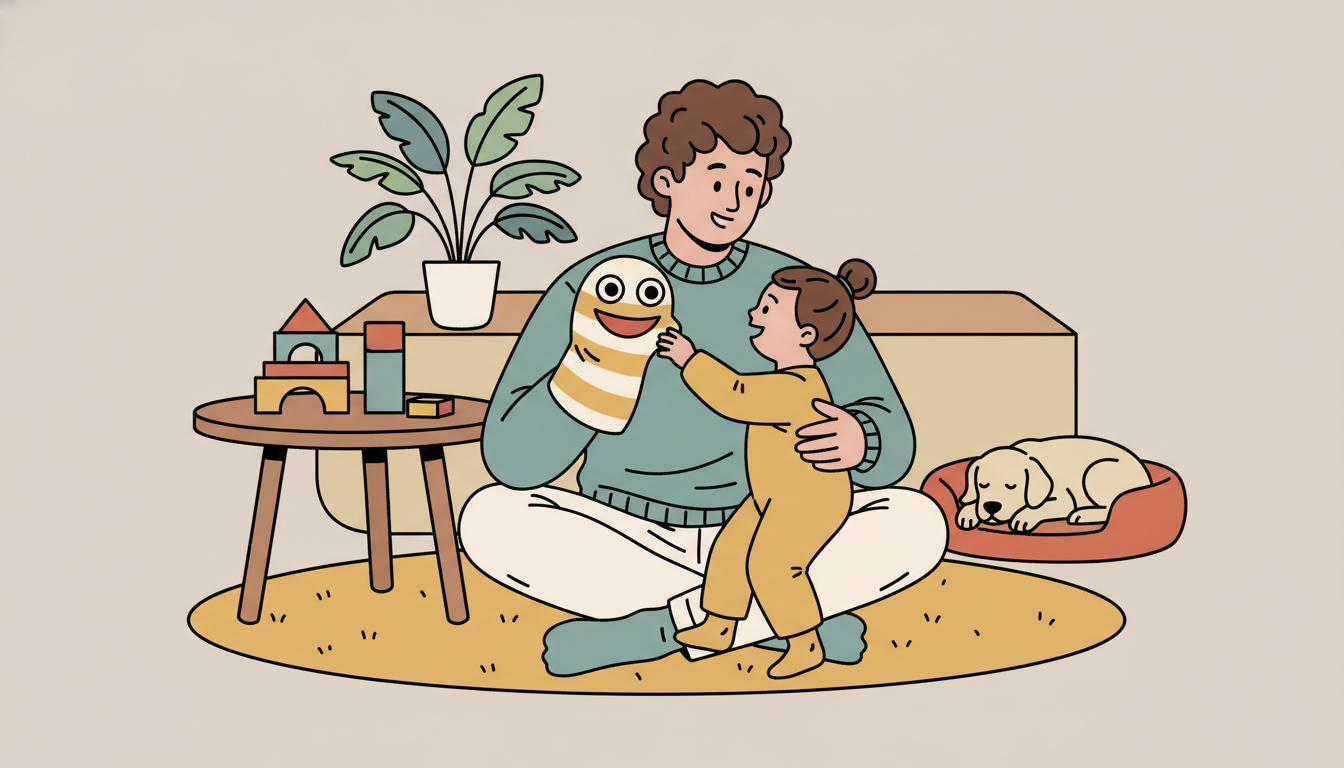
Use a simple sock puppet or stuffed animal to act out basic emotions. Make the puppet look happy, then sad, then scared. Name each feeling clearly. Let your child interact with the puppet. When the puppet is sad, you might ask 'Can you help puppet feel better?' This imaginative play lets your child explore emotions and practice caring responses in a playful way.
جزء من رحلة Steadily التطورية — مخصصة لطفلك.
كيفية القيام بهذا النشاط
Use a simple sock puppet or stuffed animal to act out basic emotions. Make the puppet look happy, then sad, then scared. Name each feeling clearly. Let your child interact with the puppet. When the puppet is sad, you might ask 'Can you help puppet feel better?' This imaginative play lets your child explore emotions and practice caring responses in a playful way.
لماذا هذا فعال
Symbolic play is emerging at this age and provides a safe way to explore perspective-taking and empathy. Research shows that positive family interactions and emotional modeling foster children's empathy abilities, leading to better social behavior (Sánchez-Pérez et al., 2018). Puppet play combines imitation and modeling with beginning symbolic thinking, allowing children to practice recognizing emotions and responding with care. The playful format makes emotional learning feel natural and engaging.
نصائح للوالدين
Keep the puppet's emotions simple and exaggerated. Big expressions are easier to read.
Use a gentle voice for the puppet. This keeps the activity calm and focused.
Let your child lead sometimes. Follow what interests them about the puppet's feelings.
المواد المطلوبة
Sock puppet or stuffed animal
طرق التعلم
Language-Rich EnvironmentImitation and ModelingBeginning Symbolic Play

هل أعجبك هذا النشاط؟ دعنا نتولى التخطيط بالنيابة عنك.
يضفي Steadily طابعاً شخصياً على كل نشاط ليناسب طفلك - اهتماماته، ومرحلته العمرية، والسمات التي يبنيها - ليكون وقت اللعب أكثر متعة وتكون لكل لحظة قيمتها.
تعرّف على كيفية عمل Steadily ←