Validation practice
2–3 سنواتEmotional Wellbeingلا توجد مواد مطلوبة
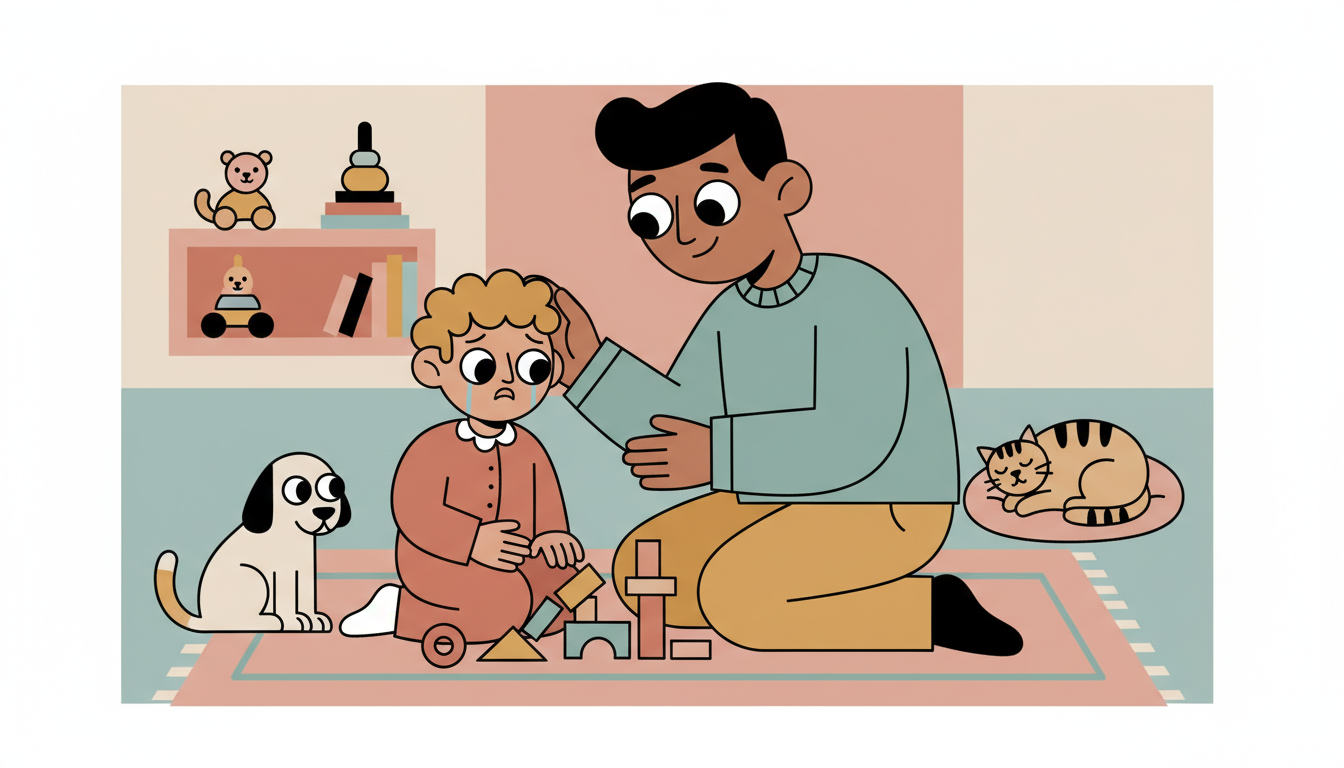
When your child shows any emotion, name it and acknowledge it before trying to solve the problem. You might say, 'You seem really frustrated that the tower fell down. That is frustrating.'
جزء من رحلة Steadily التطورية — مخصصة لطفلك.
كيفية القيام بهذا النشاط
When your child shows any emotion, name it and acknowledge it before trying to solve the problem. You might say, 'You seem really frustrated that the tower fell down. That is frustrating.'
This simple practice validates your child's emotional experience. It teaches them that all feelings are okay, even uncomfortable ones. Over time, this builds emotional awareness and trust.
لماذا هذا فعال
Emotion coaching is the most evidence-based approach for developing emotional intelligence. Research shows that children whose emotions were acknowledged and labeled by parents at age 2-3 showed significantly better emotional regulation at age 4-5, and this early emotion coaching predicted fewer behavior problems in elementary school (Goleman, 1995). A strong positive link exists between emotional intelligence and better mental health outcomes (Mayer et al., 1999).
نصائح للوالدين
Validate the feeling while still setting limits on behavior. You can say, 'You're angry, and hitting is not okay.'
You don't have to fix the feeling or make it go away. Just naming it is enough.
المواد المطلوبة
None
طرق التعلم
Symbolic and Pretend PlaySongs, Stories, and RhymesSocial Learning Through Peers

هل أعجبك هذا النشاط؟ دعنا نتولى التخطيط بالنيابة عنك.
يضفي Steadily طابعاً شخصياً على كل نشاط ليناسب طفلك - اهتماماته، ومرحلته العمرية، والسمات التي يبنيها - ليكون وقت اللعب أكثر متعة وتكون لكل لحظة قيمتها.
تعرّف على كيفية عمل Steadily ←