The feelings faces practice
3–4 añosFamily ConnectionMateriales: Paper and crayons or markers
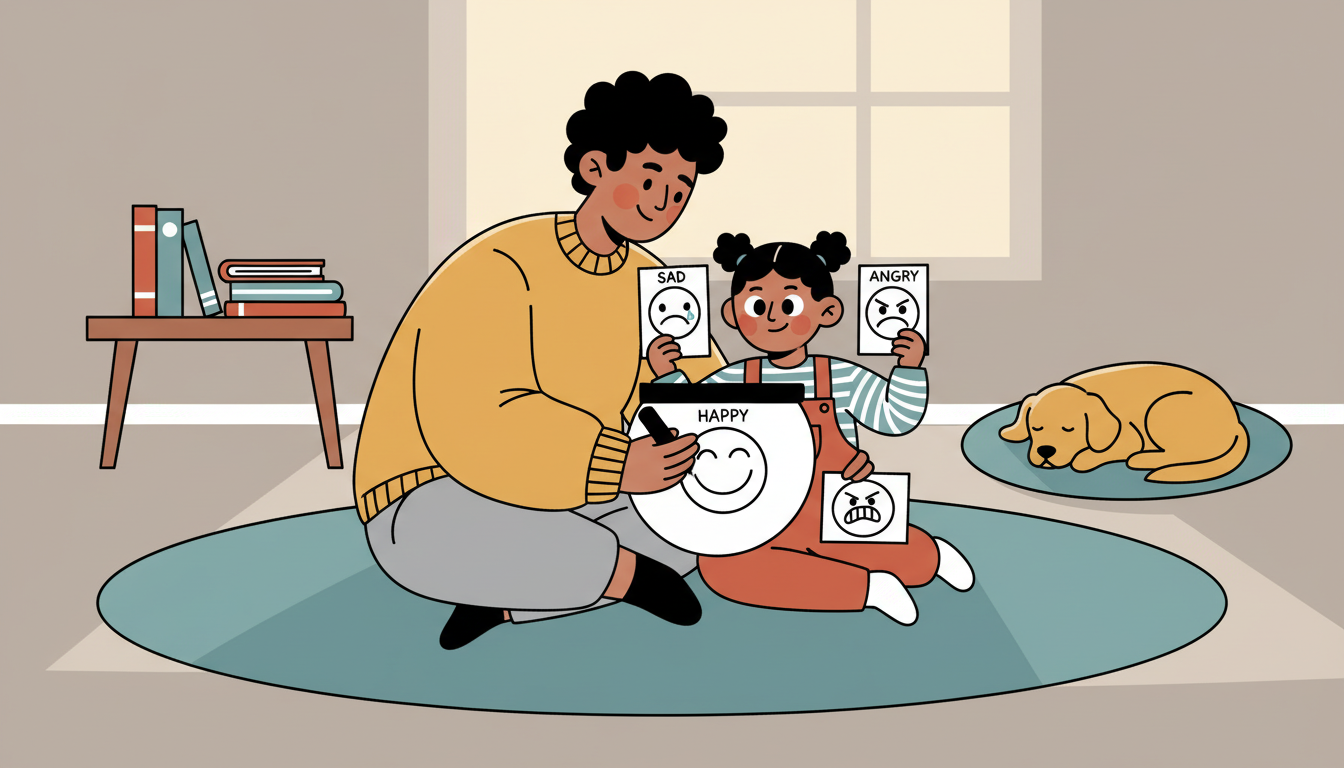
Make simple drawings of faces showing different emotions: happy, sad, angry, frustrated. When conflicts happen, ask your child to point to how they feel. Then you point to how you feel. This helps them understand that both people have feelings in a disagreement. Talk about how to make the sad or angry faces turn into happy faces together.
Parte del viaje de desarrollo de Steadily — personalizado para tu peque.
Cómo hacer esta actividad
Make simple drawings of faces showing different emotions: happy, sad, angry, frustrated. When conflicts happen, ask your child to point to how they feel. Then you point to how you feel. This helps them understand that both people have feelings in a disagreement. Talk about how to make the sad or angry faces turn into happy faces together.
Por qué funciona
Understanding emotions is essential for effective conflict resolution. Children who learn to identify and express feelings show 30% better emotional regulation (Shantz, 1987). At this age, children are developing theory of mind and can begin to understand that others have different feelings. The visual faces make abstract emotions concrete and easier to discuss.
Consejos para padres
Keep the face drawings simple. Even basic circles with different mouths work well.
Use the faces during small, everyday conflicts to build the habit.
Validate whatever feeling your child identifies. All feelings are okay, even if the behavior needs to change.
Materiales necesarios
Paper and crayons or markers
Métodos de aprendizaje
Collaborative and Cooperative PlayNarrative and Literacy-Rich ExperiencesStructured Learning Activities

¿Te encantó esta actividad? Deja que nosotros planifiquemos por ti.
Steadily personaliza cada actividad para tu hijo/a —sus intereses, su etapa, los rasgos que está desarrollando— para que la hora de jugar sea más divertida y cada momento cuente.
Descubre cómo funciona Steadily →