Dress up practice

2–3 anniEmotional WellbeingMateriali: Oversized hats, slippers, mittens, or other easy dress-up items

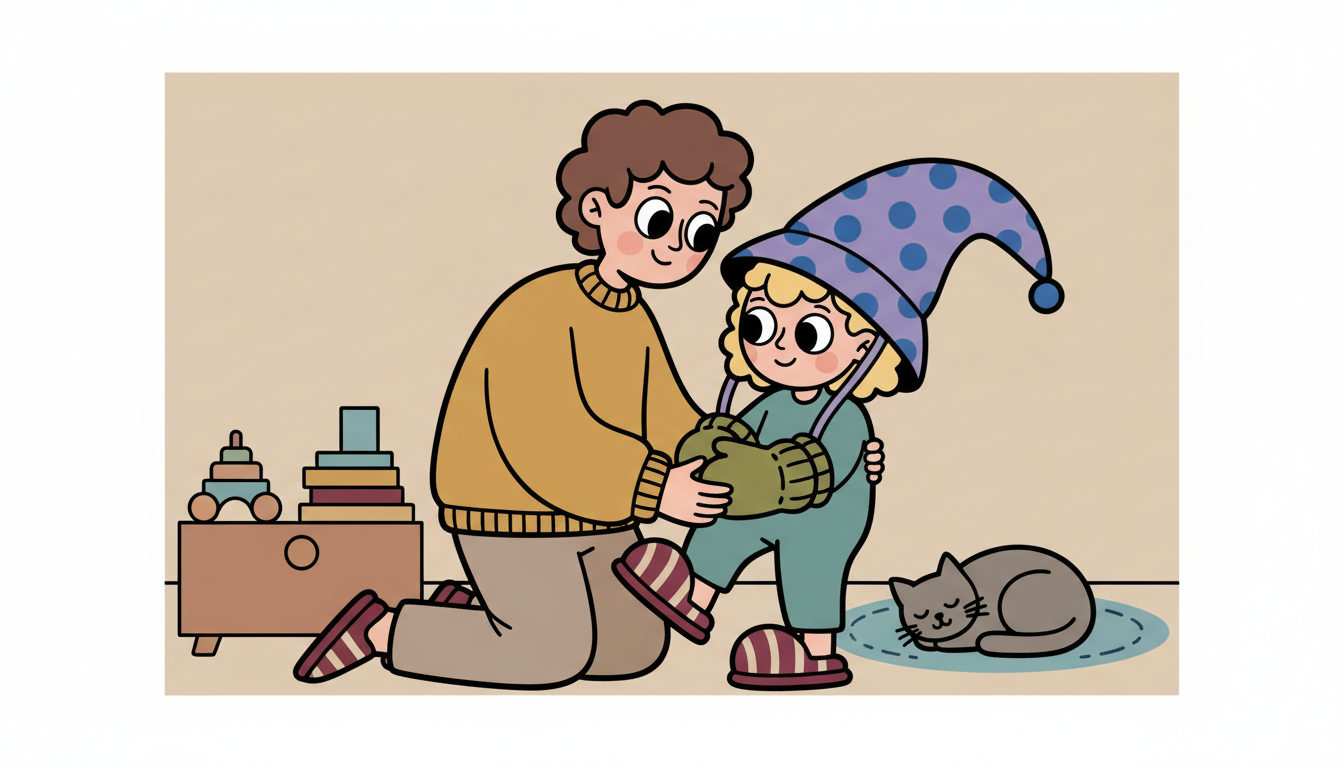
Practice simple dressing skills using items that are easier than regular clothes. Try putting on a big hat, stepping into large slippers, or pulling on mittens. These tasks are challenging enough to require effort but achievable with practice. When your child struggles, you might say, 'Dressing can be tricky. Let's work on it together.' Then break it down into smaller steps. This shows that hard things can be made easier by approaching them differently and that asking for help is a good strategy when stuck.

Parte del percorso di sviluppo Steadily — personalizzato per il tuo bambino.
Dress up practice

Come svolgere questa attività

Practice simple dressing skills using items that are easier than regular clothes. Try putting on a big hat, stepping into large slippers, or pulling on mittens. These tasks are challenging enough to require effort but achievable with practice. When your child struggles, you might say, 'Dressing can be tricky. Let's work on it together.' Then break it down into smaller steps. This shows that hard things can be made easier by approaching them differently and that asking for help is a good strategy when stuck.

Perché funziona

Self-care tasks provide natural, daily opportunities to practice persistence and build independence. These activities involve manageable challenges with clear goals, which research shows are essential for building resilience. Adults with high resilience developed in childhood exhibit significantly lower rates of anxiety and depression (Masten & Motti-Stefanidi, 2020). By supporting your child through dressing challenges rather than doing it for them, you help them develop the self-efficacy and problem-solving skills that form the foundation of resilience.

Consigli per i genitori

Choose items that are slightly easier than their regular clothes. Success builds confidence to tackle harder challenges. Break tasks into small steps. Say, 'First put your hand in. Now pull,' which matches their ability to follow two-step instructions. Let them struggle a bit before helping. This builds resilience, but step in before frustration becomes overwhelming.

Materiali necessari

Oversized hats, slippers, mittens, or other easy dress-up items

Metodi di apprendimento

Interactive Play-Based LearningSymbolic and Pretend PlaySocial Learning Through Peers

Ti è piaciuta questa attività? Lascia che siamo noi a pianificare per te.

Steadily personalizza ogni attività per il tuo bambino — i suoi interessi, la sua fase di crescita, i tratti che sta sviluppando — così il momento del gioco è più divertente e ogni istante conta.

Scopri come funziona Steadily →
