Truth or imagination game
3–4 ವರ್ಷಗಳುSuccess Mindsetಯಾವುದೇ ಸಾಮಗ್ರಿಗಳ ಅಗತ್ಯವಿಲ್ಲ
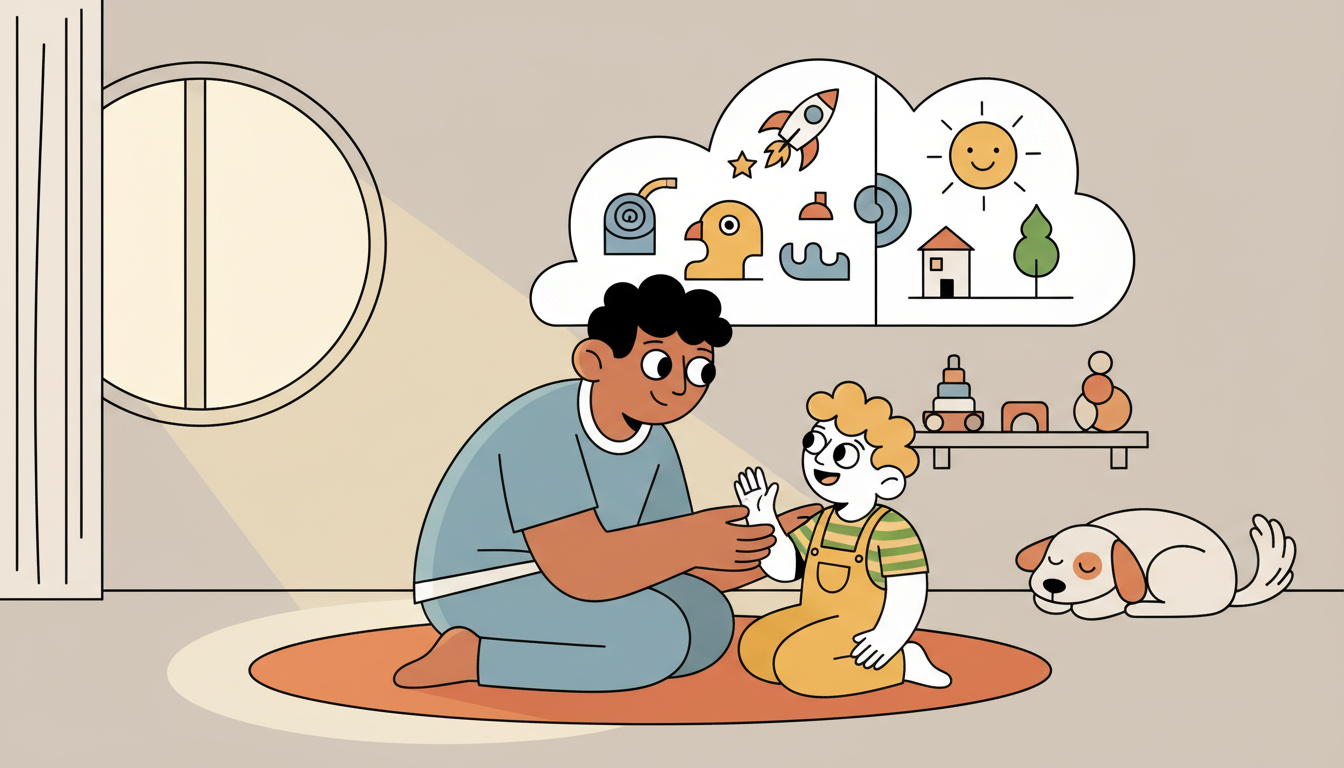
Take turns telling simple stories about your day. After each story, decide together if it was true or pretend. This helps your child distinguish between imagination and intentional deception. Make it playful and fun, celebrating both creative pretending and accurate truth-telling.
ನಿನ್ನ ಮಗುವಿಗೆ ತಕ್ಕಂತೆ ವೈಯಕ್ತೀಕರಿಸಿದ Steadily ಬೆಳವಣಿಗೆಯ ಪ್ರಯಾಣದ ಭಾಗ.
ಈ ಚಟುವಟಿಕೆಯನ್ನು ಹೇಗೆ ಮಾಡುವುದು
Take turns telling simple stories about your day. After each story, decide together if it was true or pretend. This helps your child distinguish between imagination and intentional deception. Make it playful and fun, celebrating both creative pretending and accurate truth-telling.
ಇದು ಏಕೆ ಕೆಲಸ ಮಾಡುತ್ತದೆ
Children as young as 2 begin lying, but moral reasoning develops through middle childhood. At 36-48 months, children can begin to grasp simple moral concepts and distinguish fantasy from reality. Modeling and praising honesty are most effective approaches (Hoffman, 2000). This activity builds that distinction in an encouraging way.
ಪೋಷಕರಿಗೆ ಸಲಹೆಗಳು
Start by clearly labeling your own stories as "real" or "pretend" to model the difference.
Praise both creativity and honesty. Say things like, "What a fun pretend story" or "Thank you for telling me what really happened."
ಅಗತ್ಯವಿರುವ ಸಾಮಗ್ರಿಗಳು
None
ಕಲಿಕೆಯ ವಿಧಾನಗಳು
Narrative and Literacy-Rich ExperiencesCollaborative and Cooperative PlayInquiry-Based Learning

ಈ ಚಟುವಟಿಕೆ ನಿನಗೆ ಇಷ್ಟವಾಯಿತೇ? ನಿನಗಾಗುವ ಯೋಜನೆಯನ್ನು ನಾವೇ ಮಾಡುತ್ತೇವೆ.
Steadily ಪ್ರತಿಯೊಂದು ಚಟುವಟಿಕೆಯನ್ನು ನಿನ್ನ ಮಗುವಿಗೆ ತಕ್ಕಂತೆ ವೈಯಕ್ತೀಕರಿಸುತ್ತದೆ — ಅವರ ಆಸಕ್ತಿಗಳು, ಅವರ ಹಂತ, ಅವರು ಬೆಳೆಸಿಕೊಳ್ಳುತ್ತಿರುವ ಗುಣಲಕ್ಷಣಗಳು — ಇದರಿಂದ ಆಟದ ಸಮಯವು ಹೆಚ್ಚು ಮೋಜಿನದಾಗಿರುತ್ತದೆ ಮತ್ತು ಪ್ರತಿ ಕ್ಷಣವೂ ಅತ್ಯಂತ ಅಮೂಲ್ಯವಾಗಿರುತ್ತದೆ.
Steadily ಹೇಗೆ ಕೆಲಸ ಮಾಡುತ್ತದೆ ಎಂದು ತಿಳಿ →