Puppet feelings show
1~2세Family Connection준비물: Sock puppet or stuffed animal
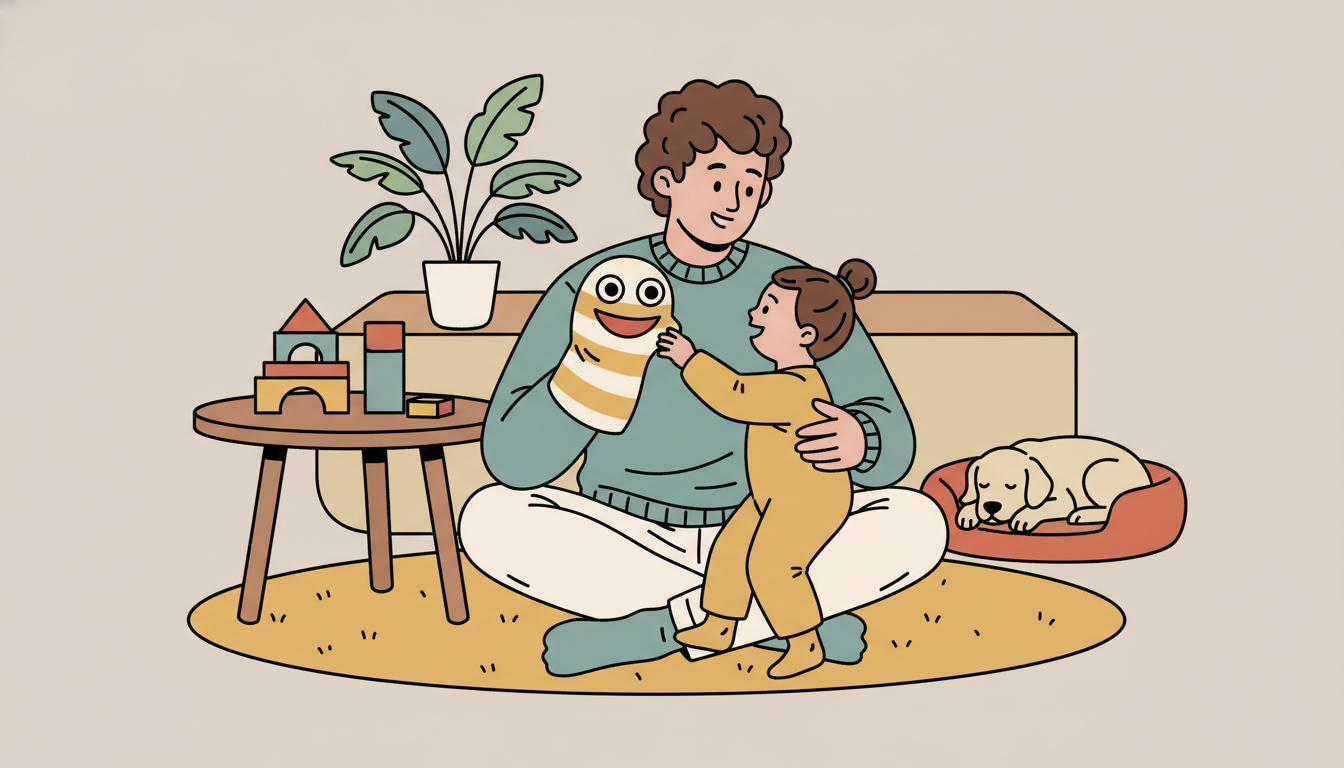
Use a simple sock puppet or stuffed animal to act out basic emotions. Make the puppet look happy, then sad, then scared. Name each feeling clearly. Let your child interact with the puppet. When the puppet is sad, you might ask 'Can you help puppet feel better?' This imaginative play lets your child explore emotions and practice caring responses in a playful way.
우리 아이에게 맞춤 설계된 Steadily 발달 여정의 일부예요.
활동 방법
Use a simple sock puppet or stuffed animal to act out basic emotions. Make the puppet look happy, then sad, then scared. Name each feeling clearly. Let your child interact with the puppet. When the puppet is sad, you might ask 'Can you help puppet feel better?' This imaginative play lets your child explore emotions and practice caring responses in a playful way.
효과가 있는 이유
Symbolic play is emerging at this age and provides a safe way to explore perspective-taking and empathy. Research shows that positive family interactions and emotional modeling foster children's empathy abilities, leading to better social behavior (Sánchez-Pérez et al., 2018). Puppet play combines imitation and modeling with beginning symbolic thinking, allowing children to practice recognizing emotions and responding with care. The playful format makes emotional learning feel natural and engaging.
부모를 위한 팁
Keep the puppet's emotions simple and exaggerated. Big expressions are easier to read.
Use a gentle voice for the puppet. This keeps the activity calm and focused.
Let your child lead sometimes. Follow what interests them about the puppet's feelings.
필요한 준비물
Sock puppet or stuffed animal
학습 방식
Language-Rich EnvironmentImitation and ModelingBeginning Symbolic Play

이번 활동이 마음에 들었어? 계획은 우리가 대신 세워줄게.
Steadily는 아이의 관심사, 발달 단계, 그리고 기르고 있는 특성에 맞춰 모든 활동을 개인화해줘. 덕분에 놀이 시간이 더 즐거워지고 모든 순간이 더욱 가치 있어지지.
Steadily 작동 방식 알아보기 →