Comfort the sad toy
2–3 ansFamily ConnectionMatériel : Toys or stuffed animals
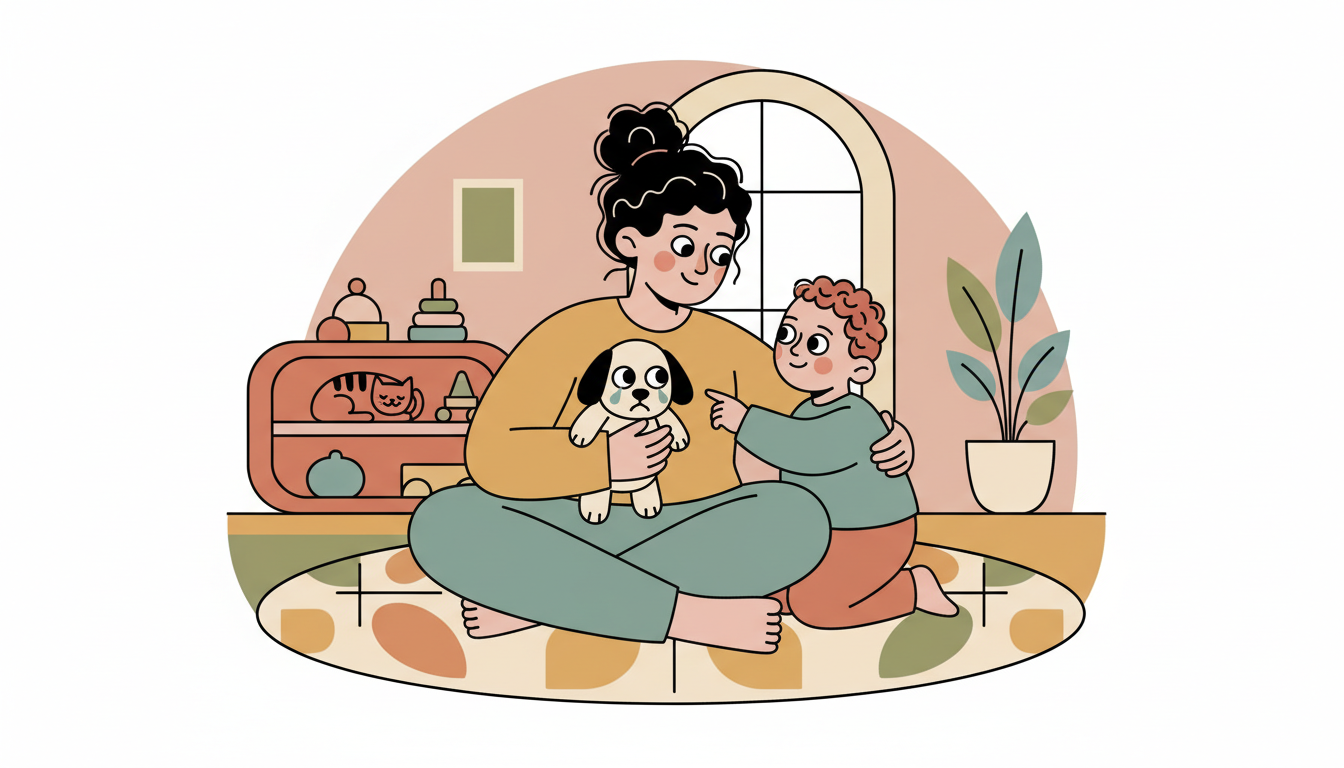
During play, pretend one of your child's toys is sad or hurt. Say 'Oh no, doggy fell down. Doggy is sad and crying.' See what your child does. If needed, model comforting: 'I will give doggy a hug. There, there, you will be okay.' Invite your child to help comfort the toy too.
Fait partie du parcours de développement Steadily — personnalisé pour ton enfant.
Comment faire cette activité
During play, pretend one of your child's toys is sad or hurt. Say 'Oh no, doggy fell down. Doggy is sad and crying.' See what your child does. If needed, model comforting: 'I will give doggy a hug. There, there, you will be okay.' Invite your child to help comfort the toy too.
Pourquoi ça marche
Early empathy training through pretend play scenarios predicts prosocial behavior and peer acceptance later in childhood. This activity uses symbolic and pretend play, which is critical for emotional development, to practice responding compassionately to others' distress (Hoffman, M. L., 2000). The theory of mind foundations being established now through such activities are critical for all future empathy development.
Conseils pour les parents
Follow your child's lead. Some children will naturally comfort the toy. Others need you to show them first.
Praise any caring response. Even just touching the toy gently shows emerging empathy.
Matériel nécessaire
Toys or stuffed animals
Méthodes d'apprentissage
Symbolic and Pretend PlaySongs, Stories, and RhymesSocial Learning Through Peers

Tu as aimé cette activité ? Laisse-nous planifier pour toi.
Steadily personnalise chaque activité pour ton enfant — ses centres d'intérêt, son stade de développement, les traits qu'il développe — pour que le jeu soit plus amusant et que chaque instant compte.
Découvre comment fonctionne Steadily →