Comfort the sad toy
2–3 JahreFamily ConnectionMaterialien: Toys or stuffed animals
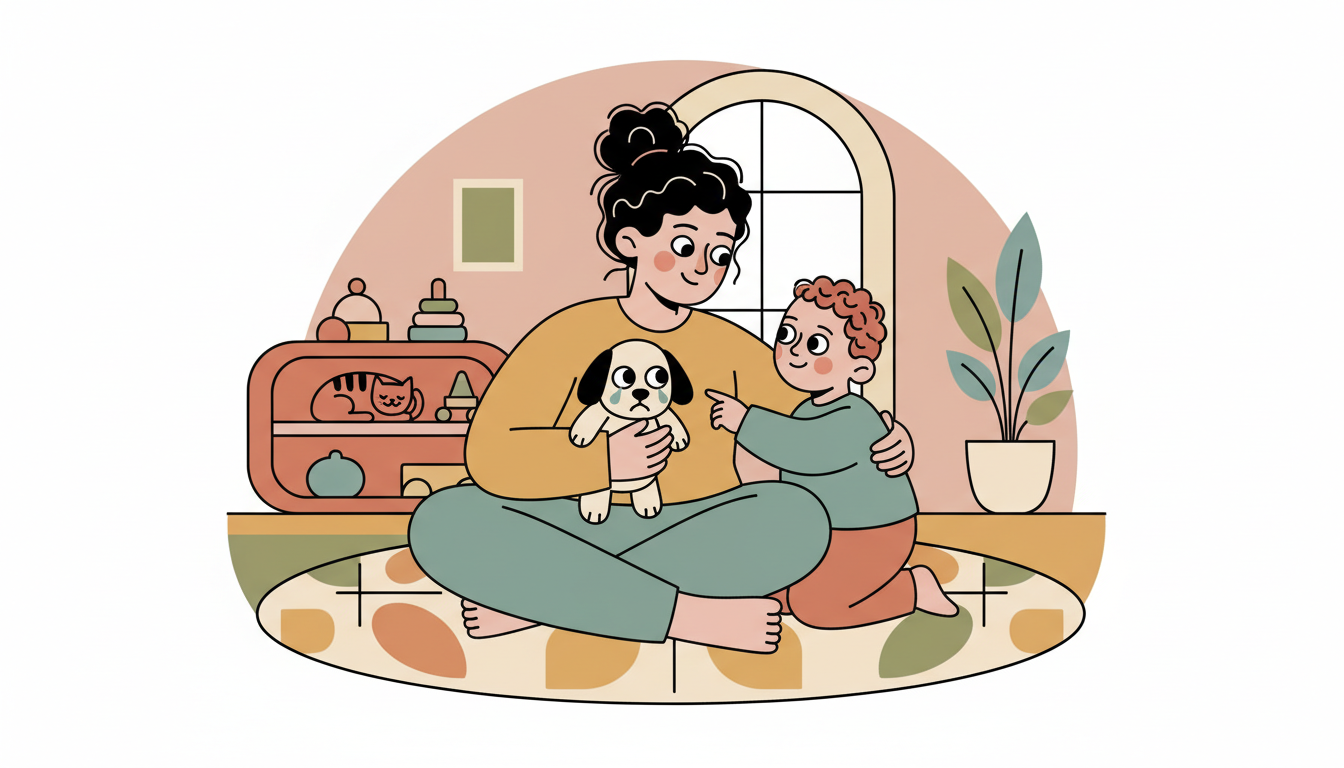
During play, pretend one of your child's toys is sad or hurt. Say 'Oh no, doggy fell down. Doggy is sad and crying.' See what your child does. If needed, model comforting: 'I will give doggy a hug. There, there, you will be okay.' Invite your child to help comfort the toy too.
Teil der Steadily-Entwicklungsreise — personalisiert für dein Kind.
So geht diese Aktivität
During play, pretend one of your child's toys is sad or hurt. Say 'Oh no, doggy fell down. Doggy is sad and crying.' See what your child does. If needed, model comforting: 'I will give doggy a hug. There, there, you will be okay.' Invite your child to help comfort the toy too.
Warum es funktioniert
Early empathy training through pretend play scenarios predicts prosocial behavior and peer acceptance later in childhood. This activity uses symbolic and pretend play, which is critical for emotional development, to practice responding compassionately to others' distress (Hoffman, M. L., 2000). The theory of mind foundations being established now through such activities are critical for all future empathy development.
Tipps für Eltern
Follow your child's lead. Some children will naturally comfort the toy. Others need you to show them first.
Praise any caring response. Even just touching the toy gently shows emerging empathy.
Benötigte Materialien
Toys or stuffed animals
Lernmethoden
Symbolic and Pretend PlaySongs, Stories, and RhymesSocial Learning Through Peers

Hat dir diese Aktivität gefallen? Lass uns die Planung für dich übernehmen.
Steadily personalisiert jede Aktivität für dein Kind — seine Interessen, seine Entwicklungsstufe, die Eigenschaften, die es aufbaut — damit die Spielzeit mehr Spaß macht und jeder Moment zählt.
Erfahre, wie Steadily funktioniert →